Samples remain viable only when their validated cryogenic temperature is maintained during storage, retrieval, transport and replenishment. By the end, you will be able to match an IBP/IOCL model to its workload, check whether its holding-time claim is usable, and build a safer continuity plan for a Delhi facility.
Key takeaways
- Use vapour-phase storage when direct nitrogen contact could damage sample packaging.
- Compare neck opening, canister count and access frequency before selecting container capacity.
- Measure static holding time under your actual fill, access and room conditions.
- Require fill procedures, sample labels, PPE and continuity support from your Delhi supplier.
How liquid nitrogen protects samples—and where the protection fails
Liquid nitrogen protects biological samples by keeping them below the temperature required to prevent damaging biochemical activity. At approximately −196°C, liquid-phase storage provides a stable, uniform cryogenic environment; vapour-phase storage reduces direct contact with nitrogen but can develop warmer zones near the neck.
Match the storage phase to the validated vial, straw or other sample container.
For an IBP/IOCL cryocan to support reliable storage, check these conditions:
- The vessel holds a safe nitrogen level and maintains the required sample temperature throughout normal access.
- Vacuum insulation remains intact; a damaged vacuum causes rapid evaporation and loss of reserve.
- The neck stays open and vented. Never block it, fit an unapproved stopper or allow ice to seal the opening, because boiling nitrogen can create dangerous pressure.
- The lid, canisters, racks and sample seals fit the vessel and prevent samples from rising into a warmer zone.
- Temperature or level checks reveal falling nitrogen before samples warm, with a documented refill schedule and emergency supply.
- The usable capacity matches the actual vial, straw and canister arrangement, not just the vessel’s gross litre rating.
The cryocan storage benefits—stable cryogenic temperature, passive operation during short power interruptions and dense rack or canister storage—end when nitrogen runs low. An open vessel evaporates continuously, even when nobody opens it, so reliable protection depends on measured holding time, replenishment access and a plan to relocate samples after equipment failure.
Choose the container around access, sample count and storage mode
A 0.5-litre vessel is not a smaller version of a 55-litre storage tank: its role, sample capacity and nitrogen reserve differ. Assessing ibp iocl cryocan benefits in delhi starts with matching the model to access frequency, sample count and whether samples remain still or travel.
| Model | Best fit | Choose it when |
|---|---|---|
| J-12 | Static or working storage | You have a modest inventory and need regular access; confirm its canister count, neck diameter and usable liquid level. |
| BA-0.5 | Short transport or bench-side use | You are moving a small batch or using samples promptly; do not treat its gross volume as long-term reserve. |
| BA-1.5 | Transport or working storage | You need more sample room and nitrogen reserve than BA-0.5 without moving a large vessel; verify tare weight before manual handling. |
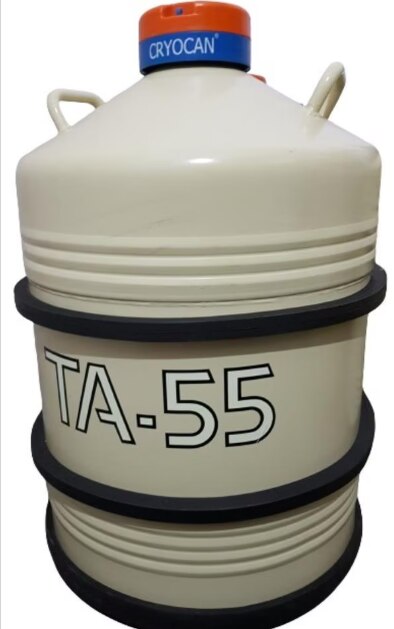
| TA-55 | High-volume static storage | You need dense, infrequently accessed inventory in one location; its size and weight make routine transport impractical. |
Before ordering, count the vials, straws or tubes per canister and measure their diameter and height. Then request the exact model revision, compatible goblets or canes, maximum positions, neck opening, tare weight, static holding-time test method and usable fill level.
Choose liquid-phase storage only when the sample containers tolerate immersion; vapour-phase storage reduces direct liquid contact but requires temperature mapping, especially near the neck. Frequent retrieval favours a wider opening, but every opening increases evaporation, so a working vessel should not replace a reserve vessel for static inventory.
Measure real holding performance before putting samples inside
A litre rating does not tell you how long samples remain protected. Before approving an ibp liquid nitrogen container in delhi, request the exact model’s nominal capacity, working capacity, neck diameter, canister layout and stated test conditions.
Measure each candidate using the same full-fill level, ambient temperature, lid-opening schedule and nitrogen grade.
| Metric | What to record | How to compare |
|---|---|---|
| Static holding time | Hours or days until the specified minimum level, with the test method | Reject headline figures with no temperature, fill-level or opening assumptions |
| Evaporation loss | Kilograms or litres of nitrogen lost per 24 hours | Compare daily loss, not just total capacity; calculate expected refill frequency |
| Vacuum performance | Vacuum-jacket test result, date, acceptance limit and retest procedure | Require a certificate and inspect for abnormal frost, rapid boil-off or a warming outer wall |
- Weigh the filled vessel at the start and after 24-hour intervals during a closed-lid test. Convert mass loss into daily nitrogen consumption using the supplier’s stated conversion basis.
- Repeat after planned lid openings and with the intended canister load. Frequent access, warm loading, damaged neck insulation and incomplete filling can shorten the advertised hold time.
- Record the number of usable canisters, vials per canister and working reserve above the minimum safe level. Two vessels with equal litres can store very different inventories.
- Add emergency refill time, local nitrogen availability and failure-relocation cost to the purchase comparison. A shorter hold time creates continuity risk even when the vessel passes its vacuum test.
Fill, label and retrieve samples without warming the inventory
Do not use frost on the outer wall as a nitrogen-level indicator. Set a refill trigger from a manufacturer-approved dipstick, gauge, or validated weighing procedure, then record the reading and date; refill before the validated minimum reserve is reached.
Prepare labels, racks, canes, transfer tools and the location map before opening the lid. Keep samples in a preassigned position, work in small batches, and return each canister or rack promptly. Repeated lid opening, incomplete filling and warm sample loading increase boil-off and expose the inventory to avoidable temperature change.
Use a controlled workflow for every deposit and withdrawal:
- Confirm the sample identifier against the request and the independent inventory record.
- Record the canister, rack, cane or goblet position before placing the sample.
- Use labels, barcodes and storage hardware validated for the intended liquid- or vapour-phase temperature.
- Keep a deposit-and-withdrawal log with operator, time, position and sample status.
- Close the lid between movements; do not leave racks on a bench while searching.
- Reconcile the physical count with the location map and investigate missing or misplaced canisters immediately.
Store the cryocan away from direct sun, poorly ventilated rooms and hot vehicle compartments. Delhi’s hot season and frequent access can shorten the practical refill interval, so check levels more frequently during those conditions and keep an offline backup of the inventory record.
Specify Delhi support, safety controls and continuity before you buy
Treat an IBP IOCL cryocan in Delhi as a continuity system, not a litre-rated purchase. Require the supplier to document how it will remain safe and usable through hot weather, scheduled refills and equipment failure.
1. Record the exact model and revision, nominal and usable capacity, static holding time, neck diameter, canister count, vial or straw capacity, tare weight, and liquid- or vapour-phase use. Ask for the technical datasheet, test certificate, warranty exclusions and approved maintenance procedure. Gross litres do not tell you how many samples fit.
2. Describe the installation and transport route in writing. Direct sun, a hot vehicle compartment, poor ventilation and frequent lid opening increase boil-off and shorten the refill interval. Require delivery instructions, upright transport, a validated liquid-level or weight check, and a refill trigger; frost on the outer wall is not a measurement.
3. Put safety controls into the quotation. Require an oxygen-deficiency monitor for the room, adequate ventilation, face shield, insulated gloves and a spill response procedure. The supplier must explain how staff will handle a tipped container, damaged vacuum or suspected oxygen depletion without entering an unsafe area.
4. Demand continuity terms with names and times: Delhi delivery lead time, emergency liquid-nitrogen refill response, service contact, spare lids and canisters, inspection intervals, and the relocation plan if the vacuum fails. Gemini Gases can be assessed on these documented commitments rather than on marketplace wording alone.
Compare the total continuity cost, including sample relocation, against the purchase price.
Related products
 | India Oil (CRYOCAN) Liquid Nitrogen Container J-12 ₹39490 Liquid Nitrogen Container Cryocan IBP is the largest normal category Cryocan made by the IBP Indian Oil Company, which is used for large volume of... |
 | India Oil (CRYOCAN) Liquid Nitrogen Container BA-0.5 If you’re looking for a reliable and efficient way to transport biological samples, semen samples, or Oocytes, the Cryocan BA-0.5 Liquid Nitrogen... |
Frequently asked questions
How does liquid nitrogen protect biological samples, and where can protection fail?
Liquid nitrogen holds samples near −196°C, slowing damaging biochemical activity. Protection fails when vapour-phase temperature varies near the neck, samples warm during retrieval, or the container loses vacuum performance.
How should you choose an IBP IOCL cryocan for sample storage?
Match the container to your sample count, canister and rack dimensions, neck opening, storage mode and retrieval frequency. A larger vessel is not automatically better if access takes longer or inventory becomes difficult to locate.
How can you measure a cryocan’s real holding performance?
Record the initial fill level, room conditions, access events and refill volume over several cycles. Compare the observed static holding time with the supplier’s stated figure before loading valuable samples.
What should you confirm with an IOCL cryocan supplier in Delhi?
Ask for operating instructions, inspection and maintenance guidance, fill and retrieval safety procedures, documentation for the specific model, refill arrangements and an emergency continuity plan.
Related products
 | India Oil (CRYOCAN) Liquid Nitrogen Container Capacity 0.6-55 Liters (LN2) Material Stainless Steel Container Type Dry Container Shape Cylindrical Outer Dia 220 mm Neck Dia 51 mm Full Weight 6.4... View product → |
 | Inox (CRYOSEAL) Liquid Nitrogen Container IN-50 ₹22500 BRAND – Inox (CRYOSEAL) MODEL – IN-50 CAPACITY – 50 LITERS CANISTER – NA STRAW CAPACITY – NA CANISTER HEIGHT – NA TOTAL HEIGHT – 29.1/740 LOSS RATE/... |
 | India Oil (CRYOCAN) Liquid Nitrogen Container Container Type Can Tank Material Stainless Steel Shape Cylindrical Weight Kilogram 2.8 - 56.6 kg Total Height 407 - 757 mm We supply a broad gamut of... View product → |
 | India Oil (CRYOCAN) Liquid Nitrogen Container ₹24500 TA 55 Liquid Nitrogen Container Cryocan IBP is the largest storage and transportation liquid nitrogen container in normal category container made by... View product → |