A research institution cannot judge surgical supplies by catalogue labels or unit price alone. By the end, you will be able to match each item to its procedure, tissue, sterility status, storage condition, and documentation, then assess whether a Delhi supplier can support the complete workflow.
Key takeaways
- Ask for manufacturer details, batch numbers, specifications, and inspection records.
- Match needle and blade design to tissue, sample, and procedure requirements.
- Quarantine reusable instruments until cleaning, inspection, and sterilisation are documented.
- Coordinate surgical, cryogenic, and breeding supplies through one traceable workflow.
What “Kwality” Must Mean Before You Buy
“Kwality” alone does not identify a manufacturer, product range, quality grade, inspection process, or even a controlled brand. It may be only a catalogue label. The claimed kwality surgical items benefits research institutions in delhi only when the supplier supports the label with verifiable product evidence and dependable supply records.
Before ordering, ask for:
- Manufacturer’s legal name, product code, batch or lot number, and certificate of conformity.
- Material or alloy specification, intended use, dimensions, and needle or instrument compatibility.
- Sterility status, sterilisation method, expiry date where applicable, packaging-integrity requirements, and whether the item is single-use or reusable.
- Inspection, calibration, warranty, replacement, and returns records that show supply capability rather than a generic “laboratory quality” claim.
Match those details to the task. Animal surgery, tissue collection, specimen handling, dissection, injections, necropsy, and laboratory training impose different requirements for sharpness, strength, contamination control, and reuse. A familiar label or low price proves neither suitability nor consistency.
For reusable instruments, require a documented cleaning, inspection, packaging, sterilisation, and traceability process. Autoclaving cannot make a poorly cleaned instrument safe, and a certificate cannot substitute for matching the item to your protocol.
Where Surgical Items Fit in Research Workflows
Animal procedures need surgical items for laboratories when a protocol involves incision, injection, tissue removal, biopsy, dissection, necropsy, or specimen transfer. Needles, blades, forceps, trays, syringes, and veterinary instruments support controlled handling rather than merely completing a shopping list.
| Research activity | Useful items | Workflow purpose |
|---|---|---|
| Animal surgery or injection | Needles, syringes, blades, forceps | Deliver treatment and protect tissue |
| Biopsy or tissue collection | Scalpels, forceps, trays, specimen containers | Separate, identify, and transfer samples |
| Dissection or necropsy | Blades, scissors, forceps, trays | Examine anatomy without avoidable damage |
| Practical training | Reusable instruments and training trays | Standardise technique and repeat practice |
Choose each item for the species, tissue type, procedure length, restraint or anaesthesia method, contamination risk, and cleaning process between animals. A human clinical instrument is not automatically suitable for a veterinary protocol; its size, grip, working angle, and tissue effect can alter results.
Your ethics and biosafety controls must define sharps segregation, cross-contamination prevention, instrument identification, and documented cleaning, inspection, packaging, and sterilisation between procedures. Record the instrument or lot used with each sample. Reliable equipment protects sample quality, operator safety, and repeatability, especially during necropsy and specimen handling.
How to Select Needles and Blades by Use, Not Label
Choose by tissue, procedure, and processing method, not by the word “Kwality.” Treat a Kwality surgical item in Delhi as comparable with alternatives only after the catalogue supplies usable specifications.
Needles require these checks:
- Point: cutting, reverse-cutting, or taper; match it to skin, fascia, muscle, vessel, or fragile tissue.
- Curvature, gauge, and length: match the access angle, tissue thickness, and suture size.
- Suture compatibility: confirm the needle eye, attached suture size, and material.
- Presentation: verify sterile or non-sterile, individually packed or bulk supplied, and single-use or reusable.
For blades, compare the following:
| Item | Confirm | Why it matters |
|---|---|---|
| Needle | Point, curvature, gauge, length, suture fit | Prevents tissue tearing and poor needle control |
| Blade | Profile, size, handle compatibility, edge sharpness | An incompatible handle or dull edge causes slipping and uneven cuts |
| Packaging | Sterility, shelf life, individual seal, latex-free status | A damaged seal or expired pack cannot support a sterile procedure |
| Reusable item | Autoclavable construction and corrosion resistance | Steam incompatibility or pitting can make reuse unsafe |
| Disposal | Puncture-resistant sharps container | Prevents needlestick injuries after use |
Ask whether each item is intended for one procedure only. Reusable instruments save repeat purchasing when cleaning, inspection, sterilisation, and traceability capacity already exists; single-use products are more practical when processing time, contamination risk, or inspection workload is high.
How to Accept, Process, and Store Reusable Instruments
At receipt, match every item to the purchase order and packing slip before it enters laboratory stock. Check:
- Manufacturer name, product code, lot or batch number, and expiry date where applicable.
- Sterile-barrier integrity, sterilisation evidence, and certificate of conformity.
- Instrument type, quantity, dimensions, and reusable or single-use status.
- Pouches for tears, stains, broken seals, damaged edges, or moisture.
- Labels and documents against the delivered tray, forceps, or veterinary instrument.
Quarantine any item with a torn pouch, missing lot number, stain, damaged edge, absent sterilisation evidence, or order mismatch. Record the discrepancy and obtain supplier review before use; do not quietly substitute or relabel it.
Process reusable instruments promptly after use. Blood, tissue, salts, and other residues dry onto surfaces and can shield microorganisms from sterilisation.
- Clean with the detergent, water quality, temperature, and method specified in the manufacturer’s IFU.
- Inspect joints, serrations, edges, hinges, and surfaces for residue, pitting, staining, or loss of function.
- Rinse, dry completely, package, sterilise, and record the load, cycle, operator, and instrument traceability.
- Confirm steam compatibility before choosing a 121°C or 134°C cycle; autoclaving does not replace cleaning.
- Store sealed, dry packs in a clean, protected cabinet.
Chloride residues, poor-quality water, prolonged soaking, incompatible detergents, and incomplete drying corrode stainless steel. Include alloy information, cleaning compatibility, repair support, and replacement availability in supplier checks.
Why Category Integration Matters in a Delhi Research Facility
A coordinated supplier reduces duplicated specifications, invoices, delivery checks, and replacement searches. That matters when one facility manages surgical items, cryogenic containers, gases, veterinary instruments, and artificial-insemination consumables. The benefit is control across categories, not permission to treat catalogue products as interchangeable.
Before comparing a surgical equipment supplier in Delhi, require evidence for each product and its support route:
- Product code, material specification, intended use, lot or batch number, and expiry date where applicable
- Sterile or non-sterile status, packaging integrity, and sterilisation record
- Gas certificate of analysis, warranty terms, and calibration or inspection records
- Named returns contact, replacement route, and delivery record
Gemini Gases can be included as one Delhi-based source in that comparison, but acceptance still depends on matching your written specification and obtaining the listed records. A familiar supplier name cannot replace that check.
For Kwality surgical supplies and associated gases, put these fields on the purchase order:
| Gas category | Specify before ordering | Why it matters |
|---|---|---|
| Industrial | Purity, moisture, hydrocarbon limits, cylinder size, pressure, regulator connection | Welding or process use does not establish laboratory suitability |
| Medical | Grade, certificate of analysis, cylinder and regulator compatibility | Patient-related use requires documented conformity |
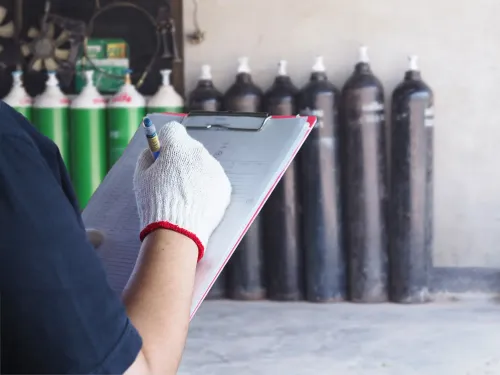
| Research | Purity, impurity limits, cylinder size, pressure, regulator connection | Cell culture and instruments can fail with unsuitable gas |
Industrial, medical, and research gases are not interchangeable.
Related products
 | Surgical Item Kwality We are the leading Supplier of Surgical item |
 | Surgical Item We are the leading Supplier of Surgical needle in Delhi View product → |
The Same Quality Logic Applies to Cryogenic and Breeding Work
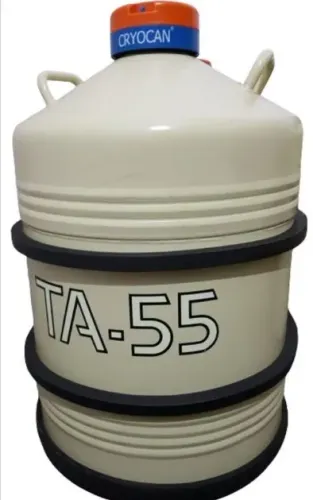
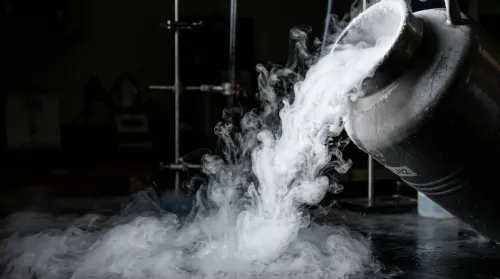
Liquid-nitrogen containers are pressure-management equipment, not ordinary flasks. Compare working capacity, static holding time, neck opening, evaporation rate, vacuum integrity, refill provisions, and inspection support—not nominal litres alone. Keep every dewar vented: sealing it can drive pressure up and rupture the vessel.
Use this connected-workflow checklist:
- Provide ventilation, safe transfer procedures, access controls, and oxygen-deficiency monitoring where a release could lower oxygen concentration.
- Match vials, racks, labels, inventory records, fill-level checks, and recovery procedures to the storage system. An unnoticed low level or misidentified vial can destroy a sample bank.
- Specify compatible pipettes, sheaths, catheters, semen containers, thawing equipment, gloves, and identification records for artificial-insemination work.
- Record straw identity and control thawing temperature, thawing time, contamination, and ambient exposure. Poor control can reduce post-thaw viability even when starting semen quality was acceptable.
Choose suppliers that support this traceable workflow, including compatible specifications and inspection records, rather than treating containers and breeding consumables as isolated, lowest-price purchases.
Frequently asked questions
What must “Kwality” mean before you buy surgical items?
Treat “Kwality” as a catalogue label until the supplier provides the manufacturer name, product specification, batch number, inspection evidence, and dependable supply records.
Where do surgical items fit in research workflows?
They support procedures such as tissue collection, sample preparation, animal surgery, dissection, and controlled handling, where consistent instruments protect sample quality and repeatability.
How should you select needles and blades for laboratory work?
Choose them by gauge, length, bevel, tip design, blade profile, sterility, and intended tissue or sample—not by the word “Kwality” or a broad product category.
How should reusable surgical instruments be accepted and stored?
Quarantine incoming instruments, check packaging and condition, record batch details, clean and sterilise them using your validated process, then store them in labelled, protected packs.
Why does category integration matter in a Delhi research facility?
A coordinated supplier can reduce ordering gaps, align documentation, and improve traceability across surgical items, gases, cryogenic storage, and animal-breeding workflows.
Related products
 | Surgical Item We are the Leading Supplier of Surgical Blade in Delhi View product → |
 | Surgical Item We are the leading supplier of Drenching Syringe 18mm in Delhi View product → |
 | Surgical Item ₹750 Country of Origin Made in India I Deal In New Only Disposable/ Reusable Reusable Material Stainless Steel Size Small We supply a broad gamut of... View product → |
 | Surgical Item ₹847 Minimum Order Quantity: 1 Piece Country of Origin Made in India Material Aluminium Body Weight 100 We supply a broad gamut of liquid nitrogen... View product → |