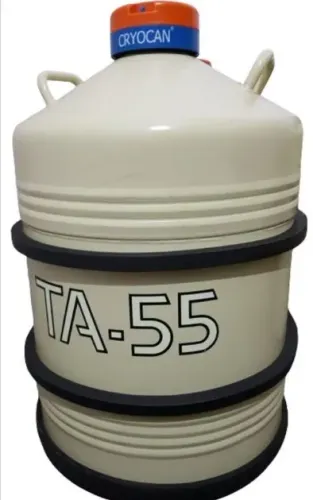

Liquid nitrogen is widely used in laboratories, healthcare facilities, research centres, veterinary applications, artificial insemination programmes, and industrial operations. Because it remains at an extremely low temperature, ordinary storage vessels are unsuitable. A properly designed Liquid Nitrogen Container helps preserve the cryogenic environment while reducing unnecessary evaporation and simplifying handling.
For users in Delhi and other parts of the NCR, understanding container construction and capacity is important before selecting equipment for routine cryogenic work.
Why Liquid Nitrogen Requires a Specialized Container
Liquid nitrogen has a boiling point of approximately -196°C. At this temperature, conventional bottles, jars, and tanks cannot provide appropriate insulation or safe handling conditions.
Cryogenic containers typically use a double-wall construction with vacuum insulation between the inner and outer sections. This design limits heat transfer from the surrounding environment and helps maintain low temperatures for longer periods.
The main benefits include:
- Reduced heat transfer
- Controlled evaporation
- Better storage efficiency
- Convenient handling of cryogenic material
- Protection of temperature-sensitive samples
The container should never be treated as a permanently sealed vessel because evaporating nitrogen continuously produces gas.
Understanding Capacity and Holding Time
Capacity is one of the first specifications buyers notice, but it should not be considered alone. A larger container does not automatically make it suitable for every application.
Users should evaluate liquid nitrogen capacity together with:
- Static evaporation rate
- Expected holding time
- Neck opening
- Container dimensions
- Empty and filled weight
- Sample storage requirements
- Frequency of liquid nitrogen refilling
For example, a laboratory storing biological samples may prioritize holding time, while a facility frequently transferring liquid nitrogen may require easier accessibility.
Liquid Nitrogen Storage in Delhi
Delhi supports hospitals, diagnostic centres, laboratories, research institutions, veterinary facilities, universities, and industrial users that depend on cryogenic storage. The appropriate container can therefore vary significantly between customers.
Gemini Gases manufactures cryogenic storage solutions for different liquid nitrogen requirements. Selecting equipment according to actual application conditions can help organizations avoid unnecessary capacity, difficult handling, or frequent refilling.
Good Handling Practices Matter
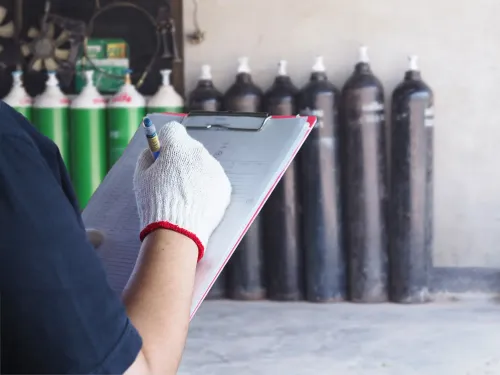
Even a well-designed container needs appropriate handling. It should remain upright and be kept in a well-ventilated location away from unnecessary heat exposure.
Users should also inspect the vessel periodically for visible damage and follow established cryogenic safety procedures when filling, transporting, or accessing stored material.
A Liquid Nitrogen Container is ultimately more than a vessel for holding LN2. Its insulation, capacity, neck design, evaporation characteristics, and handling convenience all influence storage performance. Understanding these factors helps users choose equipment that fits their operational requirements.