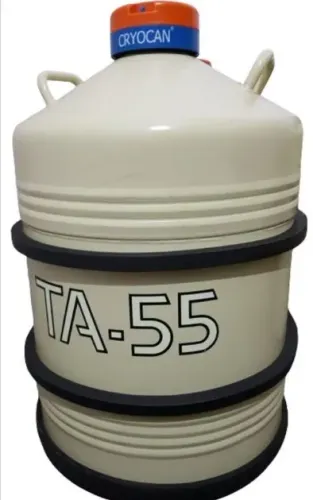

A liquid nitrogen container is designed to hold liquid nitrogen at an extremely low temperature while limiting heat transfer from the surrounding environment. Choosing the right container is important because ordinary bottles, jars, or sealed vessels are not suitable for cryogenic liquids. The selection should be based on capacity, holding time, handling frequency, application, and the way the container will be used.
For laboratories, healthcare facilities, veterinary centres, research organisations, fertility-related facilities, and industrial users in Delhi, the first question should be how much liquid nitrogen needs to be stored. A container that is too small may require frequent refilling, while an unnecessarily large unit can be inconvenient to move and manage.
The construction of a cryogenic vessel also matters. Liquid nitrogen containers generally use insulated, double-wall construction with a vacuum between the walls. This reduces heat transfer and slows the natural evaporation of liquid nitrogen.
Before selecting a container, consider:
- Required liquid nitrogen capacity
- Expected static holding time
- Frequency of opening and withdrawal
- Neck opening dimensions
- Weight when empty and filled
- Compatibility with the intended application
- Availability of suitable accessories
- Ease of transportation and handling
Users should also understand the difference between storage and transport requirements. A container that performs well as a stationary storage vessel may not automatically be appropriate for frequent movement. If samples, biological material, or other temperature-sensitive contents are involved, the internal arrangement can be just as important as the vessel capacity.
Delhi's research, medical, veterinary, educational, and industrial sectors can have very different cryogenic requirements. A university laboratory may prioritize convenient sample access, while an industrial facility may be more concerned about capacity and regular nitrogen consumption. Veterinary and breeding applications may require organized canisters for stored biological material.
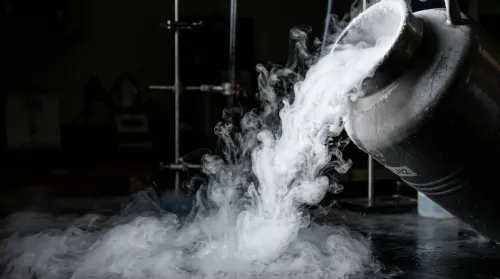
Handling practices should never be overlooked. Liquid nitrogen is approximately −196°C at atmospheric pressure and can cause severe cold burns. It also expands substantially when it becomes gas, so containers intended for liquid nitrogen must allow appropriate venting rather than being tightly sealed like conventional bottles.
Users should therefore consider the complete application rather than choosing purely by price or nominal capacity. Storage duration, evaporation performance, vessel design, handling conditions, and after-sales support all influence practical value.
Gemini Gases serves customers looking for cryogenic storage solutions in Delhi and can help users evaluate container requirements according to their intended application. Understanding these fundamentals makes it easier to select equipment that supports efficient liquid nitrogen handling without relying on a one-size-fits-all approach.