
Laboratories often require reliable cryogenic storage for research materials, biological samples, reagents, and other temperature-sensitive applications. Selecting a suitable Liquid Nitrogen Jar requires careful attention to storage capacity, insulation, accessibility, and frequency of use.
Different research workflows can require very different container configurations.
Define What the Laboratory Will Store
The first question should not be “How many litres do we need?” but “What are we storing?”
A laboratory using LN2 mainly as a cryogenic medium may require a different vessel from one storing organized biological samples.
Sample type influences the internal storage arrangement, access requirements, and suitable neck configuration.
Estimate Realistic LN2 Consumption
Review how frequently liquid nitrogen is currently replenished or estimate anticipated usage.
This provides a practical starting point for determining capacity. Laboratories should leave reasonable operating flexibility without automatically selecting the largest available vessel.
Examine Holding Characteristics
Longer holding periods can reduce the frequency of LN2 replenishment, which may be useful for facilities where samples need continuous cryogenic preservation.
However, published static holding figures should be understood in context. Actual operating conditions can differ because of frequent opening, sample retrieval, ambient conditions, and handling.
Consider Laboratory Accessibility
Researchers may need regular access to stored materials.
The container should therefore allow samples to be organized and retrieved without unnecessarily prolonged opening. Internal accessories and sample identification systems should support the laboratory's workflow.
Good inventory management can significantly improve practical usability.
Requirements for Delhi Laboratories
Delhi has universities, research institutes, hospitals, diagnostic facilities, biotechnology operations, and industrial laboratories using cryogenic equipment.
Gemini Gases manufactures liquid nitrogen storage solutions for different requirements. When evaluating a vessel, laboratory managers should communicate expected capacity, sample type, access frequency, and installation conditions.
Establish a Monitoring Routine
Liquid nitrogen levels should be checked according to the criticality of the stored materials and the facility's operating procedures.
Users should also watch for unexpected changes in nitrogen consumption, visible damage, or unusual frost patterns.
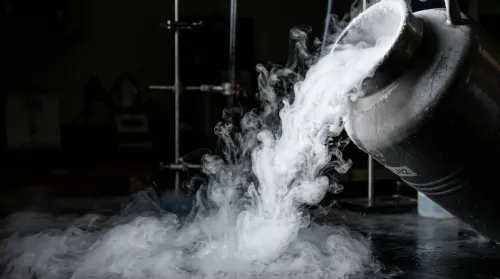
Appropriate ventilation remains essential because evaporating LN2 releases nitrogen gas into the surrounding environment.
The right Liquid Nitrogen Jar should integrate smoothly into laboratory operations. When storage capacity, holding characteristics, sample access, and handling requirements are evaluated together, research teams can establish a more practical and dependable cryogenic storage arrangement.