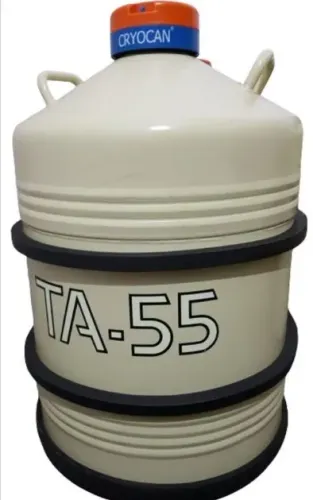

Buying a Liquid Nitrogen Dewar based solely on price or capacity can lead to an unsuitable choice. Different laboratories, healthcare facilities, research organizations, and industrial users have different requirements for storage duration, accessibility, handling, and liquid nitrogen consumption.
A structured evaluation makes the buying decision easier.
Determine the Main Application
First identify exactly how the dewar will be used.
A vessel intended primarily for storing liquid nitrogen may require different features from one used for biological sample preservation or regular LN2 transfer.
Write down the expected application before comparing specifications. This prevents attractive but unnecessary features from influencing the decision.
Check Capacity Against Consumption
Estimate how much liquid nitrogen the facility normally consumes between refills.
Choosing insufficient capacity can lead to inconvenient replenishment. Excessively large equipment, however, may occupy more space and become harder to move.
Capacity should therefore reflect realistic consumption rather than the assumption that bigger is always better.
Review Evaporation Characteristics
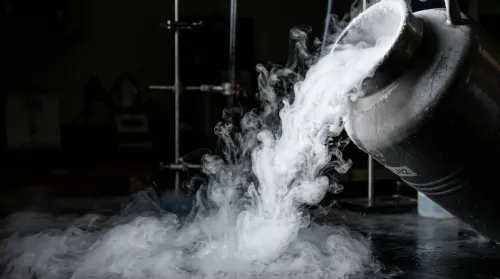
Liquid nitrogen naturally evaporates as heat enters the vessel. The construction and insulation of the dewar influence how quickly this happens under specified conditions.
When comparing equipment, consider:
- Nominal capacity
- Static evaporation rate
- Expected holding time
- Neck diameter
- Frequency of opening
These specifications should be evaluated together.
Think About Accessibility
A wide opening may simplify certain handling or transfer operations, while a narrower neck can be useful where minimizing heat entry is a greater priority.
Consider how frequently users need to access the vessel and what will be inserted or removed.
Evaluate Handling Requirements in Delhi
Organizations operating in Delhi should also consider where the equipment will be installed and whether it must be transported between departments or facilities.
Check dimensions, empty weight, filled weight, floor space, ventilation, and movement requirements.
Gemini Gases manufactures cryogenic storage equipment for different LN2 applications. Discussing actual usage conditions with the manufacturer can help buyers identify specifications suited to their operations.
Look Beyond the Initial Purchase
A dewar is generally expected to serve as long-term cryogenic equipment. Nitrogen consumption, handling convenience, refill frequency, and compatibility with everyday workflows therefore deserve attention alongside initial cost.
A properly selected Liquid Nitrogen Dewar should provide a practical balance between capacity, insulation, accessibility, and operational convenience. Evaluating these factors before purchasing reduces the risk of choosing equipment that looks suitable on paper but creates difficulties during routine use.