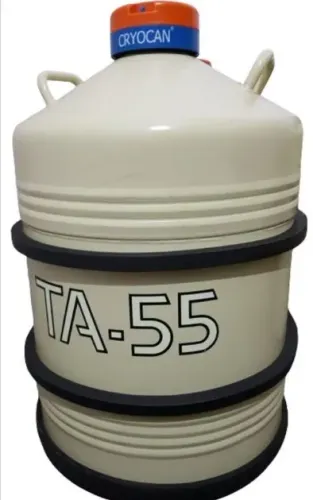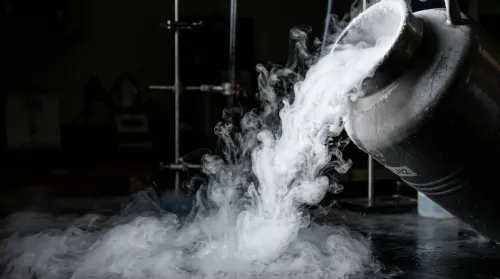

A Cryocan is commonly used where liquid nitrogen must be retained at cryogenic temperatures for extended periods. Laboratories, fertility centres, veterinary facilities, research institutions, healthcare organizations, and biological storage facilities rely on these containers for temperature-sensitive applications.
The effectiveness of a cryocan depends on much more than its external size. Its insulation, neck construction, capacity, evaporation characteristics, and handling design all influence practical performance.
How a Cryocan Works
A cryocan is designed to minimize heat entering the inner chamber. Most containers use double-wall construction combined with high-vacuum insulation.
This helps slow the transfer of heat from the surrounding environment to the liquid nitrogen stored inside. Since some evaporation naturally occurs, manufacturers specify an evaporation rate or expected holding period under defined conditions.
Important characteristics include:
- Vacuum-insulated construction
- Low heat transfer
- Suitable neck dimensions
- Appropriate internal storage arrangement
- Manageable weight and dimensions
- Compatibility with intended cryogenic use
Holding Time Is an Important Consideration
For many users, holding time matters as much as capacity.
Two cryocans with similar nominal capacities can behave differently depending on their construction, neck opening, frequency of access, environmental conditions, and usage pattern.
A facility that opens its container several times every day may experience different practical nitrogen consumption from one that rarely accesses stored samples.
Users should therefore avoid selecting a cryocan solely by litre capacity.
Selecting Cryocans for Delhi Facilities
Research institutions, hospitals, laboratories, veterinary centres, universities, and industrial facilities across Delhi may have very different storage requirements.
Before purchasing, determine:
- How much liquid nitrogen will normally be stored?
- How frequently will the container be opened?
- What material will be stored?
- How often can liquid nitrogen be replenished?
- Will the vessel remain stationary or require movement?
- What internal accessories are required?
Gemini Gases manufactures cryogenic containers for different storage applications, allowing buyers to evaluate equipment according to operational requirements rather than relying only on basic capacity.
Everyday Practices That Influence Performance
A cryocan should be kept upright in a suitable, well-ventilated area. Unnecessary movement, rough handling, excessive heat exposure, and repeated opening can affect practical storage efficiency.
Routine observation is equally important. Users should monitor nitrogen levels according to their application and inspect the vessel for unusual frost formation, physical damage, or unexpected changes in nitrogen consumption.
A well-selected Cryocan provides an efficient way to maintain liquid nitrogen for cryogenic applications. Matching its capacity, holding characteristics, accessibility, and construction to the intended use is the best way to achieve dependable day-to-day storage.