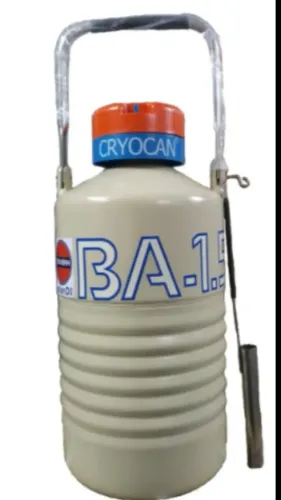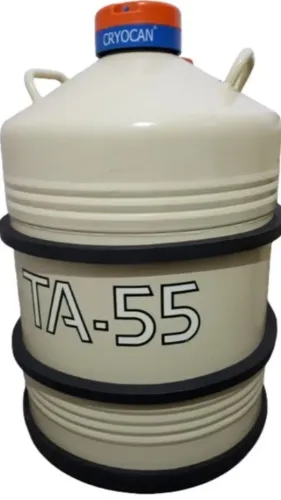
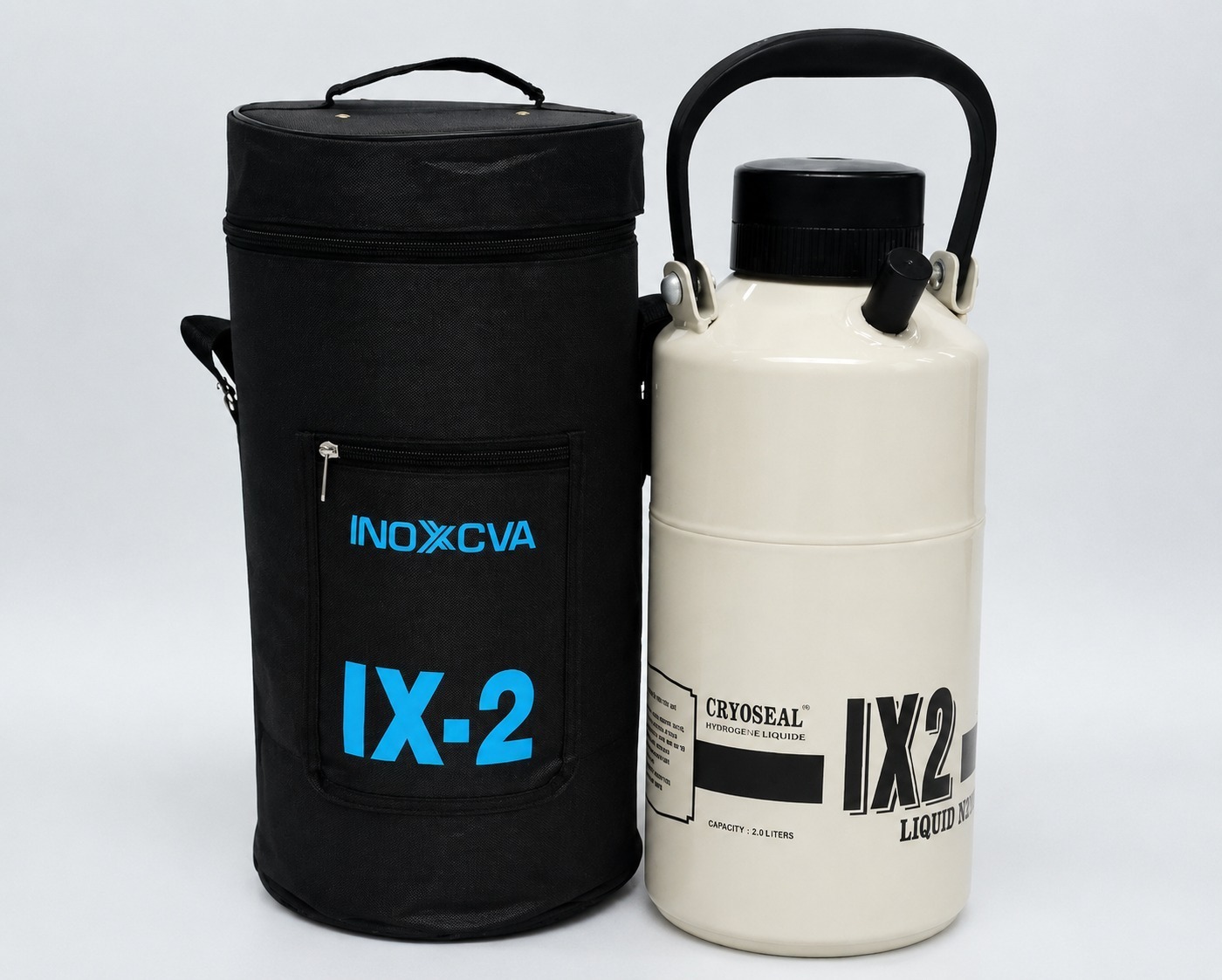
A semen container used for cryopreserved material performs a highly specialized job. It must help maintain the extremely low-temperature environment required for stored semen while allowing organised access to straws or samples when needed. The container itself is important, but correct monitoring and handling practices are equally critical.
Liquid nitrogen is widely used for cryogenic preservation because its boiling point at atmospheric pressure is approximately −196°C. Appropriate cryogenic storage can maintain biological material at very low temperatures, but the effectiveness of a storage programme depends on maintaining adequate nitrogen levels and minimizing unnecessary warming during handling.
A semen storage vessel generally incorporates vacuum insulation to reduce heat transfer. Inside, canisters or similar arrangements may be used to organise samples. This internal organisation is more important than it may initially appear because users need to locate the required material efficiently without keeping the vessel open longer than necessary.
Good storage practice includes several basic disciplines:
- Check liquid nitrogen levels according to an established schedule.
- Maintain clear sample identification and records.
- Avoid leaving the neck area exposed unnecessarily.
- Keep the vessel upright and protected from impact.
- Use appropriate cryogenic gloves and face protection when handling nitrogen.
- Keep the storage area adequately ventilated.
- Follow the sample-handling protocol relevant to the biological material.
Frequent sample access can affect nitrogen consumption. Every time the container is opened and material is handled, heat can enter. Efficient sample organisation can therefore support both operational convenience and better temperature management.
Another common mistake is assuming that a container containing some liquid nitrogen automatically provides ideal storage conditions everywhere inside it. Storage protocols should be based on the requirements of the material, container configuration, nitrogen level, and established cryopreservation procedures.
Veterinary breeding and artificial insemination services in Delhi and the wider National Capital Region may need semen containers in different capacities depending on sample volume and field or facility use. A small operation with limited inventory has different needs from a high-volume breeding programme.
Gemini Gases supplies cryogenic storage solutions for users in Delhi who need equipment for specialised low-temperature applications. When choosing a semen container, users should consider capacity, sample organisation, expected holding performance, access frequency, and handling requirements together.
Reliable cryogenic preservation is not achieved simply by purchasing a container and filling it with nitrogen. Regular monitoring, disciplined sample retrieval, correct safety procedures, and appropriate equipment selection are all part of maintaining a dependable semen storage system.