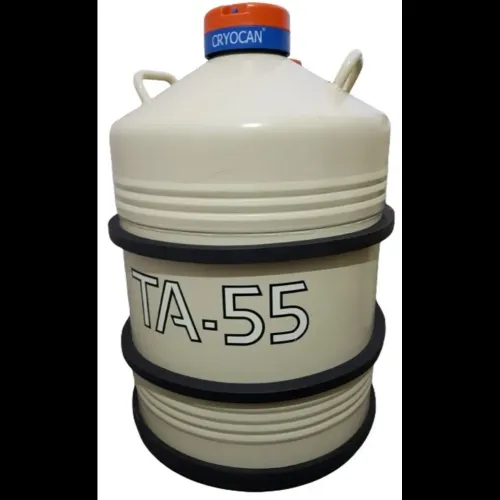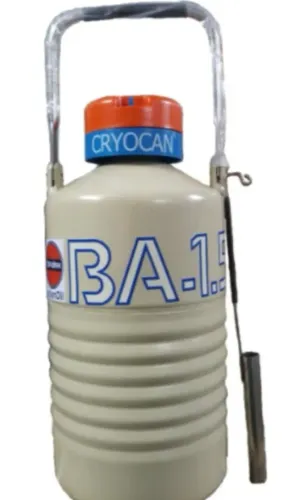
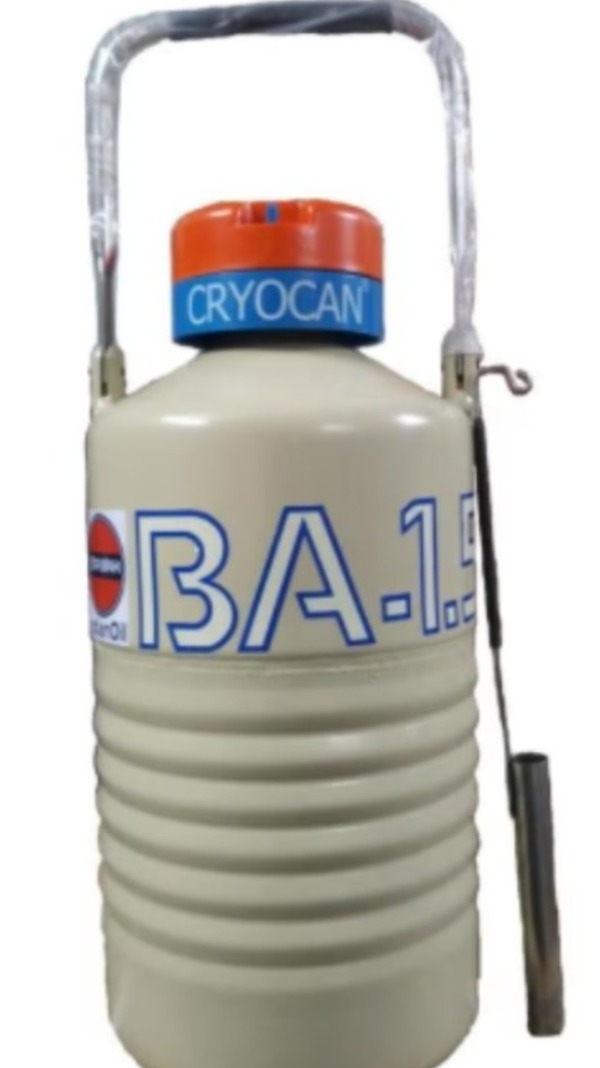
A Cryocan is a vacuum-insulated cryogenic vessel commonly associated with the storage of liquid nitrogen and materials that must remain at cryogenic temperatures. Its design helps reduce heat entering the vessel, allowing liquid nitrogen to remain in liquid form for an extended period while natural evaporation takes place gradually.
The term is frequently encountered by laboratories, veterinary professionals, artificial insemination centres, research institutions, hospitals, and other organisations working with biological samples or cryogenic materials. Although different capacities and configurations are available, the basic purpose is controlled low-temperature storage.
A typical cryogenic can consists of an inner vessel and an outer shell separated by a high-vacuum insulation space. This construction is important because ordinary insulation cannot efficiently manage the extreme temperature difference between liquid nitrogen and the surrounding environment.
Depending on its configuration, a Cryocan may be used for applications such as:
- Storage of biological samples
- Veterinary artificial insemination programmes
- Semen preservation
- Laboratory specimen storage
- Research applications
- Cryogenic material handling
- Short- or longer-duration liquid nitrogen storage
One specification users frequently encounter is static evaporation or holding time. Liquid nitrogen continuously absorbs heat from its surroundings and gradually changes into gas. A well-designed vessel reduces this heat ingress but cannot eliminate evaporation completely.
Actual performance can also differ from ideal static conditions. Frequent opening, sample retrieval, transportation, ambient conditions, and handling practices can increase nitrogen consumption. Users should therefore avoid evaluating a vessel based only on a theoretical holding-time figure.
Another consideration is neck size. A wider opening can make accessing stored material easier but may also allow more heat to enter during use. For applications requiring frequent sample retrieval, the balance between accessibility and nitrogen conservation becomes important.
In Delhi, Cryocans are relevant to organisations ranging from veterinary and agricultural operations to laboratories, universities, medical facilities, and research centres. Requirements can differ significantly, which is why capacity alone is rarely enough to determine suitability.
Safe use is equally important. Liquid nitrogen should be handled in adequately ventilated areas with appropriate cryogenic protective equipment. Because nitrogen gas can displace oxygen, storage and handling arrangements need to account for ventilation, particularly indoors.
Gemini Gases works with customers requiring cryogenic equipment in Delhi. Understanding what a Cryocan does, how its insulation works, and how operating conditions influence nitrogen consumption gives buyers a stronger foundation for selecting a vessel suited to their actual work.